
Child Tooth Infection: Symptoms Parents Cannot Safely Ignore
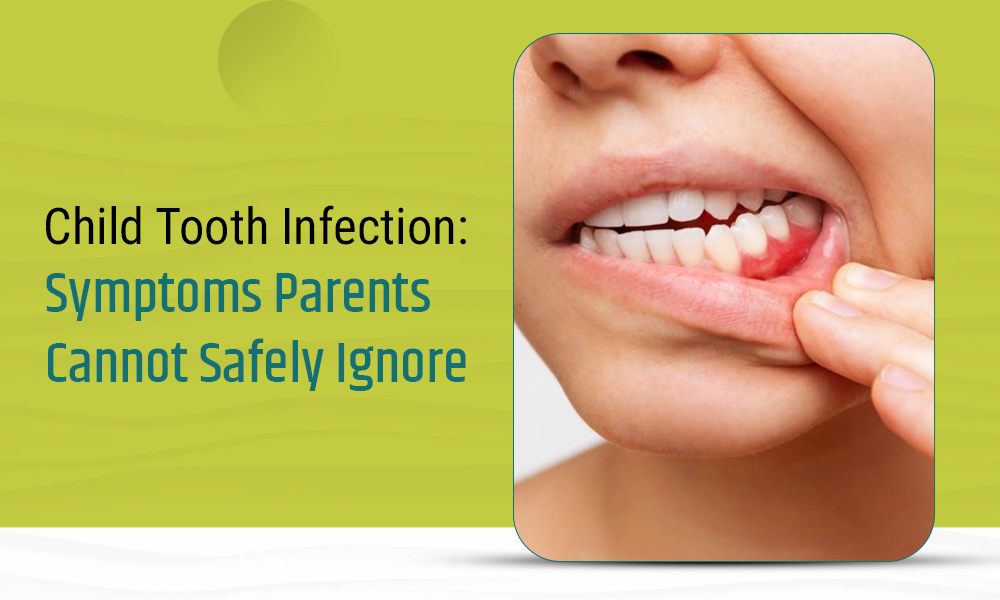
A child tooth infection may start with a cavity or injured tooth, then worsen without warning. Do not wait for severe pain. A gum bump, facial swelling, fever, eating trouble, or a dark tooth can signal danger.
Learn how to spot urgent signs, choose between a dentist and the ER, and understand treatment for an infected baby tooth.
Child Tooth Infection: How Does It Start?
Germs can enter a deep cavity, crack, or damaged tooth and reach its softer center. The problem may spread to the root and gum.
Cavities That Reach Deeper
A cavity may begin without pain. As it grows, a child may feel chewing pain or nighttime aching. Early children’s dental fillings can repair some cavities before they deepen.
Tooth Injuries That Change Later
A fall or hard bite can damage a tooth without breaking it. Later, it may turn gray, feel sore, or develop a gum bump. Seek pediatric dental trauma care if its color or comfort changes.
Child Tooth Infection Symptoms To Watch
Children may point to the wrong tooth or struggle to explain pain. Watch eating, sleeping, brushing, and behavior.
Tooth Pain And Chewing Changes
Look for steady pain, pain when biting, or sensitivity to hot, cold, or sweet foods. Younger children may chew on one side, refuse firm foods, cry during brushing, rub their cheek, or wake at night.
Gum, Cheek, Or Jaw Swelling
Child tooth infection swelling may appear as a raised gum, puffy cheek, or jaw fullness. Compare both sides and watch whether it grows. Even mild facial swelling needs a prompt dental call.
Gum Bumps And Bad Taste
A tooth abscess in a child may look like a pimple near the tooth. It may release fluid and cause a bad taste or smell. Never squeeze it. Drainage may lower pressure without removing the cause.
Fever, Tiredness, Or Tooth Color
Fever with tooth pain or swelling is concerning. A child may seem unusually tired or eat less. A gray or dark baby tooth after injury should be checked, even without pain.
Dental Infection: Dentist Or ER?
Most tooth infections need dental treatment. The American Academy of Pediatric Dentistry includes infection, facial swelling, and pain among dental emergencies.
Call A Dentist Promptly
Arrange urgent care for lasting pain, a gum bump, drainage, local swelling, a dark tooth, chewing trouble, or fever with tooth symptoms. Castle Hills provides pediatric dental infection care to find the source and discuss next steps.
Get Emergency Help Now
Go to the ER if your child has trouble breathing or swallowing, cannot handle saliva, has swelling near the eye or neck, or develops rapidly increasing facial swelling. Serious weakness, confusion, or difficulty waking also needs immediate help.
The hospital may control dangerous swelling, but a dentist still needs to treat the tooth.
Child Tooth Infection: Can It Disappear?
No. Pain may fade after fluid drains or the tooth stops responding, but the infection can remain. A painless gum bump does not prove healing. Arrange an examination instead of waiting for pain to return.
Dental Visit: What Can Parents Do?
Call the office and describe the swelling, fever, gum bump, injury, and when symptoms began. Photograph changing swelling.
Safe Comfort Steps
Offer soft foods and have your child chew on the other side. Use a cold pack wrapped in cloth outside the cheek briefly. Brush gently. Ask a professional which pain medicine and dose suit your child.
Mistakes Parents Should Avoid
Do not pop a gum bump, apply heat, place aspirin on the gum, give leftover antibiotics, or use an adult dose. Do not cancel because pain improves. These actions may hide symptoms without fixing the tooth.
Child Tooth Infection Treatment Options
Treatment depends on the tooth type, healthy tooth left, spread of swelling, and when a baby tooth should naturally fall out.
Dental Exam And X-Rays
The dentist checks the tooth, gum, swelling, and injury history. Pediatric dental X-rays may reveal hidden problems. Dr. Abraham uses the findings to explain the source and guide parents through suitable choices.
Saving Or Removing The Tooth
When enough healthy teeth remain, repair may be possible. Baby root canal care may clean and preserve an infected baby tooth. A badly damaged tooth may need a child-friendly tooth extraction.
Dr. Abraham helps parents compare keeping the tooth with leaving infection behind. The choice depends on the child and tooth.
Antibiotics When Needed
Antibiotics may be used for spreading swelling, fever, or another reason found by the dentist. They can control germs but often cannot remove the problem inside the tooth, so dental treatment may remain necessary.
Infected Baby Tooth: Does It Matter?
Yes. Baby teeth support chewing, speech, and space for permanent teeth. An infected baby tooth should not be ignored because it will fall out. The dentist considers damage, swelling, location, and time remaining before recommending repair or removal.
Tooth Infection Prevention That Works
Supervise twice-daily brushing, clean between touching teeth, limit frequent sugary snacks and drinks, and keep regular dental exams and cleanings. Dr. Abraham can identify missed areas and guide age-appropriate home care. Check dark or damaged teeth after injury.
Child Tooth Infection: Take Action Early
A child tooth infection may cause pain, but swelling, gum bumps, drainage, fever, eating changes, and a dark tooth also need attention. Contact a pediatric dentist promptly. Seek emergency help for breathing trouble, swallowing difficulty, or rapidly spreading facial or neck swelling.
Why Choose Castle Hills Pediatric Dentistry?
Castle Hills Pediatric Dentistry helps parents understand the cause of tooth pain, swelling, or gum bumps without confusing language. Dr. Abraham carefully evaluates each child, explains suitable treatment choices, and guides families through urgent next steps. The goal is timely care that protects comfort, growing smiles, and long-term dental health.
Child Tooth Infection FAQs
Can A Child Have A Tooth Abscess Without Pain?
Yes. A gum bump, drainage, bad taste, dark tooth, or mild swelling may appear before strong pain. A painless dental abscess in a child still needs a dental check because the source can remain under the gum.
Should I Take My Child To The ER For Facial Swelling?
Call a dentist promptly for local gum or cheek swelling. Go to the ER now if swelling grows quickly, reaches the eye or neck, or causes trouble breathing, swallowing, speaking, or safely handling saliva.
Will Antibiotics Cure An Infected Baby Tooth?
Antibiotics may reduce spreading swelling or fever when prescribed, but they may not remove the damaged area inside an infected baby tooth. A dentist must decide whether to repair, clean, or remove it.
What Should I Do If A Gum Bump Bursts?
Do not squeeze the area or assume the infection has ended. Have your child gently spit out any fluid, keep the mouth clean, and contact a dentist. Reduced pressure or pain does not mean the tooth is healed.
Can A Tooth Infection Affect An Adult Tooth?
An untreated infection near a baby tooth may harm nearby gum, bone, or the developing permanent tooth. Early evaluation helps the dentist choose treatment that controls the infection and protects future dental growth.


