
Chipped Tooth in a Child: What to Do and When Care Is Urgent
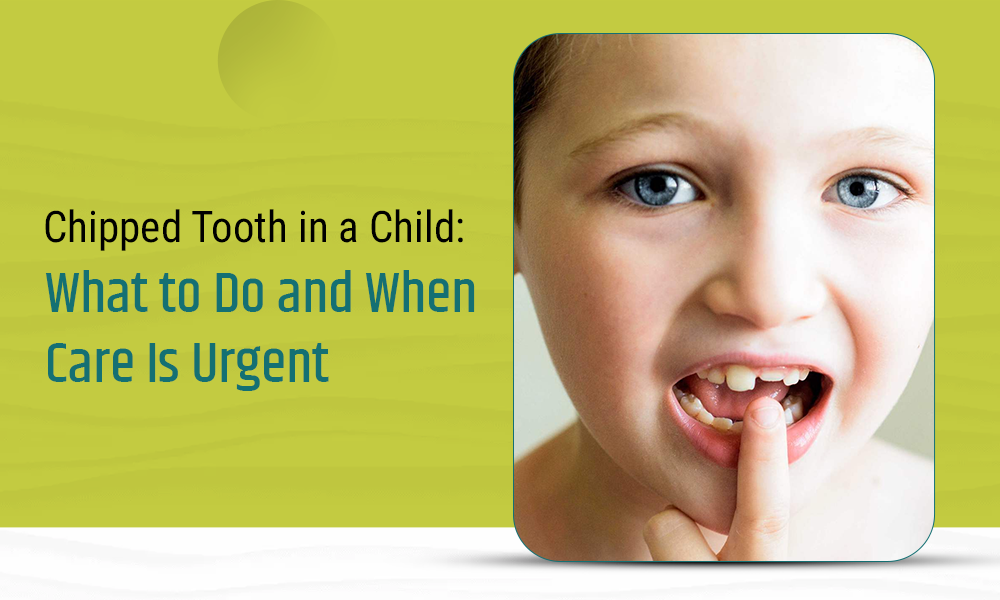
A chipped tooth in a child can happen after a fall, sports collision, or hard bite. Even a tiny chip leaves parents unsure what to do. This guide explains first steps, urgent signs, baby-tooth versus permanent-tooth care, and possible repairs.
Chipped Tooth First Steps
Check Your Child First
Before checking the tooth, look for trouble breathing, passing out, unusual confusion, heavy bleeding, or a serious head, jaw, or facial injury. Get emergency medical help for these problems first.
Rinse And Control Bleeding
Have your child rinse gently with lukewarm water if they can spit safely. Press clean gauze against a bleeding lip or gum, and hold a cold pack outside the cheek.
Save The Broken Piece
Place any tooth piece in milk or saliva and take it to the dentist. Do not scrub it, glue it back, or let your child handle it.
Call The Dentist
Share your child’s age, how the accident happened, and whether the tooth hurts, bleeds, looks loose, or feels sharp. Dr. Abraham uses these details to guide parents on visit timing. The American Academy of Pediatric Dentistry’s chipped-tooth guidance also recommends prompt advice.
Chipped Tooth In A Child: Urgency Signs
Get Emergency Help Now
Seek emergency medical care for breathing trouble, passing out, major facial injury, or bleeding that will not slow. These problems come before the tooth.
Call A Dentist Today
Request same-day care for a child’s dental injury when a large piece is missing or the tooth has strong pain, swelling, ongoing bleeding, a deep pink or red spot, looseness, or a new position.
Small Chip Without Pain
A child chipped front tooth with no pain may not require hospital care, but call the dentist. A small chip can hide a crack or cut the tongue.
Tooth Chip, Crack, Or Break?
Small Rough Edge
A chip often looks like a missing corner or rough edge. It may feel sharp but cause little pain.
Larger Missing Piece
A broken tooth in a child has a larger area missing. Cold drinks, air, or chewing may hurt because the inner tooth has less protection.
Loose Or Moved Tooth
A cracked tooth in a child may show a line or hurt when biting. A tooth that looks longer, shorter, pushed backward, or loose needs prompt checking. A completely knocked-out tooth requires different emergency steps.
Baby Tooth Or Permanent Tooth?
Toddler Chipped Tooth
A toddler chipped tooth still matters. Baby teeth help with chewing, speech, and holding space. Chipped baby tooth treatment may only involve smoothing, but the dentist must first judge the depth and whether the tooth feels secure.
Permanent Front Tooth
A child chipped front tooth may be permanent in the early school years. Saving the piece may help the dentist rebuild or reattach it. Early care can protect the remaining tooth.
Chipped Tooth Severity Levels
Minor Chip
A minor chip is small, painless, and not loose. Call the dentist for advice rather than assuming it needs no care.
Prompt-Care Chip
A larger chip, sharp edge, sensitivity, or chewing pain needs prompt care. Avoiding cold water or chewing on one side can signal soreness.
Urgent Tooth Break
Strong pain, swelling, a deep opening, looseness, or a moved tooth needs urgent attention. Pediatric dental X-rays may reveal damage hidden below the visible surface.
Child Chipped Tooth Treatment Options
Smooth A Sharp Edge
A dentist may smooth a tiny rough area so it stops irritating the tongue or lip. Some painless baby-tooth chips only need monitoring afterward.
Rebuild The Missing Part
A small or medium chip may be rebuilt with tooth-colored material. Dental fillings can restore the shape and cover a sensitive area.
Protect A Larger Break
When much of the tooth is missing, dental crowns may protect it. Dr. Abraham explains whether repair, a crown, or monitoring fits the tooth, age, and signs.
Remove A Tooth Only When Needed
Removal may be considered when a badly broken baby tooth cannot be repaired or keeps causing pain or swelling. When needed, tooth extraction for children is planned around comfort and nearby teeth.
Chipped Tooth Care Before The Visit
Offer soft foods and let your child chew on the other side. Avoid hard, sticky, crunchy, very hot, or icy foods. Brush gently, do not test a loose tooth, and never use household glue or a nail file on the chip.
Tooth Changes After The Injury
Watch the tooth for several weeks. Call if it darkens or develops pain, swelling, a gum bump, bad taste, fluid near the gum, sleep problems, or trouble eating. Changes may appear after a normal-looking first day.
Preventing Another Chipped Tooth
Use a fitted sports mouthguard and discourage chewing ice, hard candy, pencils, or toys. Make toddler play areas safer and ask about teeth grinding. Preventive pediatric dental care can identify weak areas.
The Best Next Step
Stay calm, check for other injuries, rinse the mouth, save any broken piece, and call the dentist. Seek emergency help for breathing trouble, passing out, major facial injury, or bleeding that will not slow. Timely dental guidance can reduce discomfort and prevent further damage.
Why Choose Castle Hills Pediatric Dentistry?
Castle Hills Pediatric Dentistry helps families respond clearly when a child chips or breaks a tooth. Dr. Abraham checks the injury, explains what parents should watch for, and recommends care based on the child’s age, comfort, tooth type, and damage. The team also supports careful follow-up as the tooth heals.
Chipped Tooth FAQs
Can A Chipped Baby Tooth Heal Itself?
A chipped baby tooth cannot grow the missing piece back. A tiny, painless chip may only need smoothing or monitoring, but a dentist should check its depth, sharpness, stability, and any later color change.
Does A Painless Chipped Front Tooth Need Care?
Yes. A painless child chipped front tooth may only have surface damage, but pain is not the only sign of a deeper problem. Call a pediatric dentist, avoid hard foods, and watch for color or swelling changes.
What If My Child Swallowed The Tooth Piece?
A small tooth piece often passes without causing trouble. Seek urgent medical help for coughing, choking, trouble breathing, chest pain, or difficulty swallowing, and tell the dentist that the fragment is missing.
Can A Chipped Baby Tooth Affect The Permanent Tooth?
Most small chips do not harm the permanent tooth below. A strong impact, deep break, swelling, or long-lasting problem can raise concern, so prompt checking and follow-up help protect the developing tooth.
Can A Child’s Chipped Tooth Be Fixed In One Visit?
Many small chips can be smoothed or rebuilt in one appointment. Larger breaks may need X-rays, a protective crown, follow-up checks, or a different plan based on the tooth type, pain, and the child’s comfort.


