Knocked-Out Tooth in Kids: Baby vs Permanent Emergency Guide
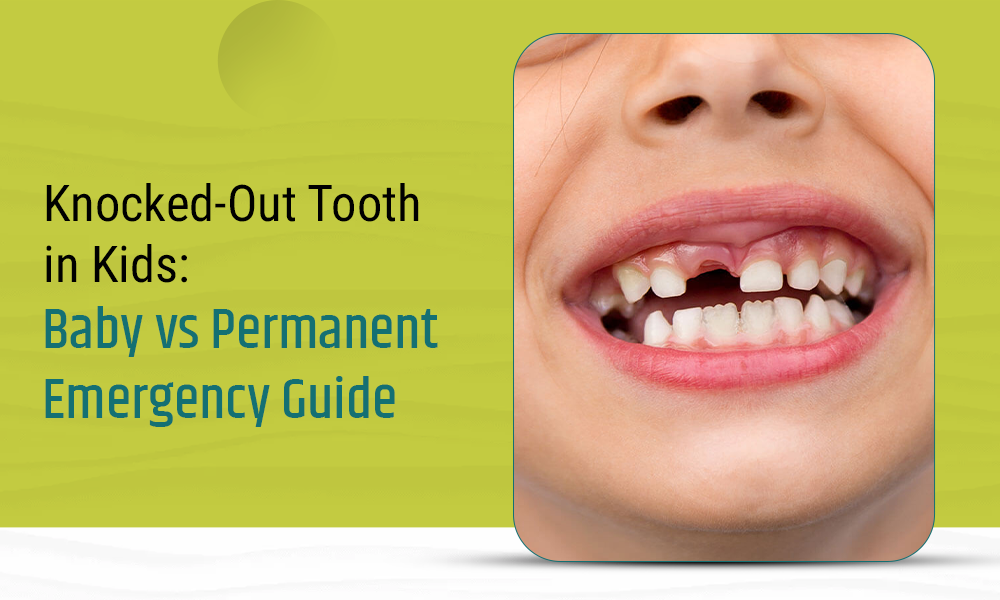
A fall, sports hit, or playground accident can leave your child bleeding and missing a tooth. Your first question should be: was it a baby tooth or a permanent tooth?
For a knocked out tooth in kids, never put a baby tooth back. A permanent tooth may be saved if it is handled carefully, kept moist, and treated immediately. Use this guide while another adult calls the dentist.
Baby Or Permanent Tooth?
If you cannot identify the tooth, keep it moist and call a pediatric dentist. Do not risk putting a baby tooth back.
Check For Other Injuries
First, confirm that your child is awake, breathing normally, and responding. Go to the emergency room for loss of consciousness, repeated vomiting, confusion, unusual sleepiness, breathing trouble, a possible broken jaw, or bleeding that continues despite firm pressure with clean gauze.
Permanent Tooth: Act Now
A child knocked out permanent tooth needs immediate attention. Start these steps while someone contacts the dentist.
Find The Tooth
Pick it up by the white top. Do not hold, pinch, or wipe the root because the delicate surface helps the tooth reconnect.
Clean It Gently
If dirty, briefly rinse it with milk, saline, or the child’s saliva. Do not scrub, brush, scrape, or use soap. Do not delay care trying to make it spotless.
Put It Back If Safe
When you are sure it is permanent and your child is alert and cooperative, gently place it into the gap in the correct direction. Never force it. Ask your child to bite softly on clean gauze.
Skip this step if the child may swallow it or has a serious facial injury.
Keep It Moist
When the tooth cannot go back, place it in a clean container of cold milk, saline, or a tooth-preserving solution. Never wrap it in tissue or let it dry. The American Academy of Pediatrics first-aid guidance also stresses careful handling and immediate care.
Reach The Dentist
Call while leaving. Report when the injury happened, how the tooth was stored, and whether your child hit their head. Castle Hills provides care for dental trauma in children, allowing the team to prepare before arrival.
Baby Tooth Knocked Out: What Should Parents Do?
A knocked out baby tooth should never be pushed back because it may harm the adult tooth underneath. Press clean gauze on the gum, rinse gently, apply a cold pack outside the cheek, and call the pediatric dentist.
If a toddler knocked tooth out, bring the tooth when easily found, but do not delay searching. The dentist should check the gum and nearby teeth. After early loss of a back tooth, space maintainers for children may be considered based on age, tooth position, and when the adult tooth is expected.
Baby Tooth Or Permanent Tooth: How Can Parents Tell?
Children commonly begin losing front baby teeth around age six, but children can have both tooth types for several years. Ask:
- Was it already loose?
- Is an adult tooth expected in that spot?
- Is it larger or slightly darker than nearby baby teeth?
- Does it match the tooth on the opposite side?
When uncertain, keep it moist and seek urgent help. Dr. Simi Abraham can check the location, your child’s age, and the injury to guide the next step.
Dentist Or Emergency Room?
Call an emergency pediatric dentist when a permanent tooth is out, a tooth is badly broken or displaced, or you cannot identify it.
Choose the emergency room first for breathing trouble, unconsciousness, repeated vomiting, confusion, suspected jaw injury, or uncontrolled bleeding. If no emergency dentist is available, the hospital can assess the injury and help locate care.
How Will a Pediatric Dentist Treat a Knocked-Out Tooth?
For a permanent tooth, the dentist checks its position, nearby teeth, surrounding bone, and how long it stayed dry. It may be cleaned, placed correctly, and temporarily supported by nearby teeth.
For a baby tooth, the dentist checks whether part remains or the tooth was pushed into the gum. Dr. Abraham may use child-friendly dental X-rays when needed to see below the surface and guide parents clearly.
Mistakes That Worsen Tooth Injuries
Avoid putting a baby tooth back, touching a permanent tooth’s root, scrubbing the tooth, using soap or peroxide, wrapping it in tissue, waiting until tomorrow, or letting a toddler hold it inside the mouth. Bleeding that stops does not remove the need for a dental check.
Care After The Visit
Follow instructions for food, brushing, and pain relief. Offer soft foods, avoid biting with the injured area, and brush gently. Call the dentist for increasing pain, swelling, fever, drainage, or tooth color changes. Keep follow-up visits and ask when sports can safely resume.
Preventing Another Tooth Injury
Use a fitted mouthguard for contact sports and activities involving falls. Add helmets for bikes, scooters, and skating. Do not let children run with hard objects in their mouths, and save the dentist’s number in family, school, and sports contacts.
Act Fast And Protect The Smile
Never replace a baby tooth. For a permanent tooth, hold the white top, keep it moist, and get urgent dental care. When the tooth type or injury severity is unclear, call a pediatric dentist rather than waiting for symptoms to worsen.
Why Choose Castle Hills Pediatric Dentistry?
Castle Hills Pediatric Dentistry provides child-focused guidance when falls or sports injuries damage a tooth. Dr. Abraham helps parents understand the injury, checks nearby teeth, and explains the next steps clearly. Families can access pediatric dentistry for prompt evaluation, follow-up care, and age-appropriate support after unexpected dental emergencies.
Knocked-Out Tooth FAQs
Can A Knocked-Out Baby Tooth Be Put Back?
No. Never push a knocked-out baby tooth into the gum because it can harm the adult tooth developing underneath. Control bleeding with clean gauze, apply a cold pack, and arrange a pediatric dental check.
Does A Knocked-Out Baby Tooth Grow Back?
The same baby tooth will not grow back. The permanent tooth should later appear in its place. A dentist should examine the injury and decide whether the space needs monitoring, especially when the tooth is lost early.
What Should I Do If My Toddler Knocks Out A Front Tooth?
Do not put the baby tooth back. Apply clean gauze, use a cold pack, and call a pediatric dentist. Seek emergency care for vomiting, unusual sleepiness, breathing trouble, confusion, or bleeding that will not stop.
How Long Can A Permanent Tooth Stay Out?
A permanent tooth has the best chance when replaced or kept moist immediately. Do not wait for a deadline. Place it in milk when needed and travel to an emergency dentist as quickly as possible without delay.
What If I Cannot Find The Tooth?
Seek prompt care even when the tooth is missing. It may be hidden in the mouth, pushed into the gum, swallowed, or breathed in. Tell the dentist or emergency team so they can decide whether an exam or X-ray is needed.